Intelligent Building Energy Consumption Monitoring: Empowering Green Operation and Maintenance with Intelligent Control
2026.01.29
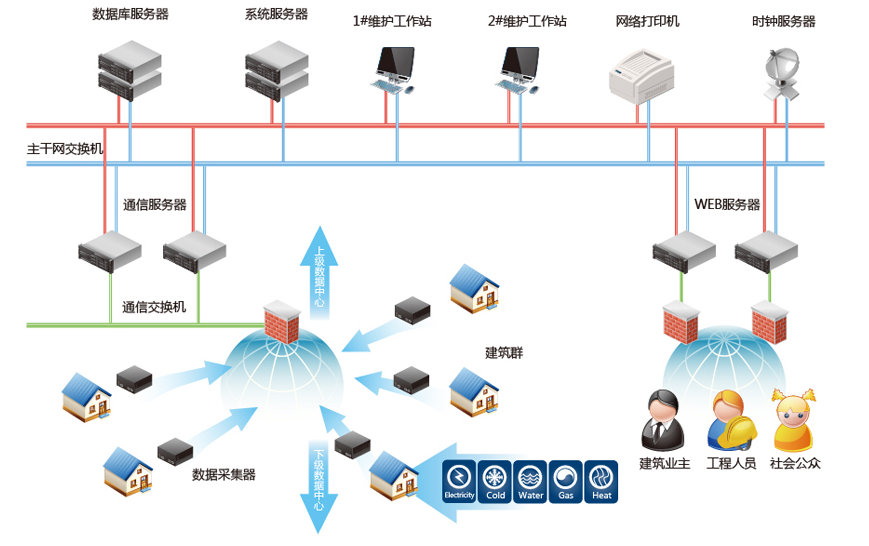
Under the guidance of the "dual carbon" goals and the rapid development of intelligent buildings, building energy consumption, as an important part of social energy consumption, its refined management has become the core demand of the industry. Relying on the Internet of Things, big data and other technologies, the intelligent building energy consumption monitoring system breaks the traditional extensive energy consumption management mode, realizes comprehensive and intelligent control of building energy consumption. It is not only a key means to reduce operation costs, but also an important support to promote the low-carbon transformation of the construction industry, helping to build efficient, energy-saving and green modern buildings.
More Detail
Workshop Energy Consumption Monitoring: The "Digital Scale" and "Optimization Engine" for the Green Transformation of Industry
2026.01.27
![]()
Driven by both the national "Dual Carbon" goals and the upgrading of industrial intelligence, workshops, as the core carriers of industrial production, see their energy consumption costs account for 30% to 50% of enterprises' operating expenses. Issues such as high energy consumption, low efficiency and ambiguous energy consumption data have become key bottlenecks restricting enterprises in cost reduction, efficiency improvement and green transformation. The workshop energy consumption monitoring system realizes real-time perception, accurate metering and intelligent analysis of energy consumption through digital means. It not only provides enterprises with a "panoramic view" of energy consumption, but also serves as a core support for tapping energy-saving potential, optimizing production operation and maintenance, and practicing low-carbon development, driving the transformation of industrial workshops from "extensive energy consumption" to "refined energy control".
The energy consumption structure of industrial workshops is complex and diverse, mainly covering electricity, heat, water resources, gas and other types, among which electricity consumption accounts for the highest proportion, involving various power-consuming units such as production equipment, air conditioning and ventilation systems, lighting, air compressors and cooling towers. Compared with commercial buildings, workshop energy consumption features strong volatility, concentrated load and multiple influencing factors—adjustments to production plans, equipment start-stop and process switching can all lead to drastic fluctuations in energy consumption. The traditional management mode relying on manual meter reading and empirical judgment fails to realize real-time capture, accurate traceability and scientific analysis of energy consumption data, often resulting in a passive situation of "unclear energy consumption, unknown loopholes and no basis for optimization". The core value of the energy consumption monitoring system is precisely to break this predicament through technological empowerment and build a full-process and all-dimensional energy consumption management system.
More Detail
"The 'Energy Control Hub' of Smart Buildings, Ushering in a New Era of Lean Management"
2026.01.27
![]()
In today’s era of deep integration between urbanization and intelligence, buildings are no longer static reinforced concrete structures, but "living entities" endowed with perception, analysis, and decision-making capabilities. As the "neural center" and "energy-saving brain" of smart buildings, the Building Automation System (BAS) has evolved from a standard technology in high-end commercial complexes to a core supporting system for all types of buildings to achieve green and low-carbon transformation, improve operational efficiency, and optimize living experiences. By integrating computer technology, sensing technology, network communication, and automatic control technology, it enables the scattered electromechanical equipment in buildings to shift from "passive response" to "proactive intelligence", completely reshaping the operational logic and management paradigm of modern buildings. This article will delve into its core value, diverse scenario applications, and future development trends, systematically explaining how this technology drives the construction industry toward a new stage of efficiency, comfort, and sustainable development.
More Detail
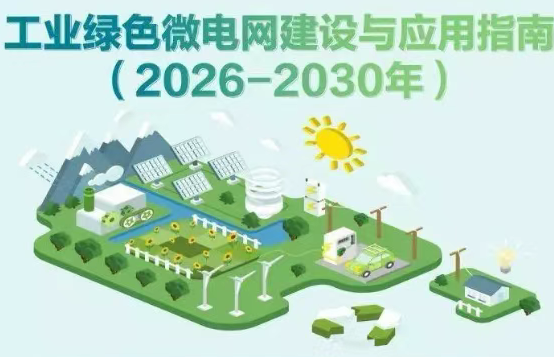
Five Ministries and Commissions Issue Guidelines for Industrial Green Microgrids (2026-2030): Building Intelligent Control Becomes a Core Tool for Collaborative Carbon Reduction
2026.01.21
![]()
The Guidelines specify that an industrial green microgrid is an integrated system incorporating technologies such as photovoltaic power, wind power, new-type energy storage, and intelligent energy management and control. Its core objective is to drive the transformation of industrial enterprises and parks from energy "consumers" to "prosumers", addressing key pain points in the industrial sector including a high proportion of energy consumption and insufficient absorption of green electricity.
Data shows that in 2024, industrial electricity consumption accounted for over 60% of the total social electricity consumption in China. While the number of operational industrial green microgrid projects nationwide has exceeded 300, they are still in the pilot and demonstration stage. Problems such as inconsistent technical standards and inadequate market-oriented mechanisms urgently need to be resolved.
The issuance of these Guidelines has, for the first time at the national level, clarified the construction principles, models and application scenarios for industrial microgrids, providing systematic guidance for the development of the sector.
More Detail
The "Wireless Nerves" of Smart Buildings: Four Core Communication Technologies Underpin the Logic of Automation Systems
2026.01.20
In the evolution of Building Management Systems (BMS) from wired interconnection to wireless intelligence, communication technology has always been the core support. Traditional wired deployment faces pain points such as high construction costs, difficulties in retrofitting old buildings, and insufficient flexibility. In contrast, four major wireless technologies—LoRa, NB-IoT, ZigBee, and 5G—with their differentiated characteristics, precisely adapt to the diversified scenarios of building automation. They build a wireless communication network featuring "seamless sensing and fully interconnected control", serving as a key cornerstone for the implementation of smart buildings.
More Detail
Demand Response Strategies: Building Load Management Under Grid Interaction
1970.01.01
Demand Response,Grid Interaction,Building Load Management,Smart Grid,BAS,Energy Optimization,Peak Shaving,Intelligent Dispatch
More Detail